
Early Orthodontic Care
By the age of seven, children have a mix of baby and permanent teeth, and examining them can give an orthodontist a wealth of information. If a problem exists or if one is developing, we can course correct your child's smile, setting the foundation for a lifetime of good oral health.
Here's why age seven is the right time to think about braces and why families across Nashville choose Avenue South Orthodontics.
Why It Matters
What to Watch For
To determine if your child needs to see an orthodontist, keep an eye out for these warning signs:
If you notice any of these concerns, come visit us at Avenue South Orthodontics in Nashville for a complimentary exam.

Orthodontics and Sleep Quality
If you were surprised to see mouth breathing listed as a sign of a need for orthodontics, you're not alone. The truth is that narrow arches, crowding, or a small jaw can restrict airflow, and mouth breathing is a common indicator. These issues can cause poor sleep marked by snoring, difficulty concentrating, and daytime fatigue. By gently widening the palate and guiding jaw growth while bones are still developing, orthodontics can open nasal passages and increase airway space, which can dramatically improve your child's quality of sleep. During a consultation, I can determine if orthodontics can help your child experience easier nasal breathing, better sleep, and healthier development as they grow.
Patient Spotlight
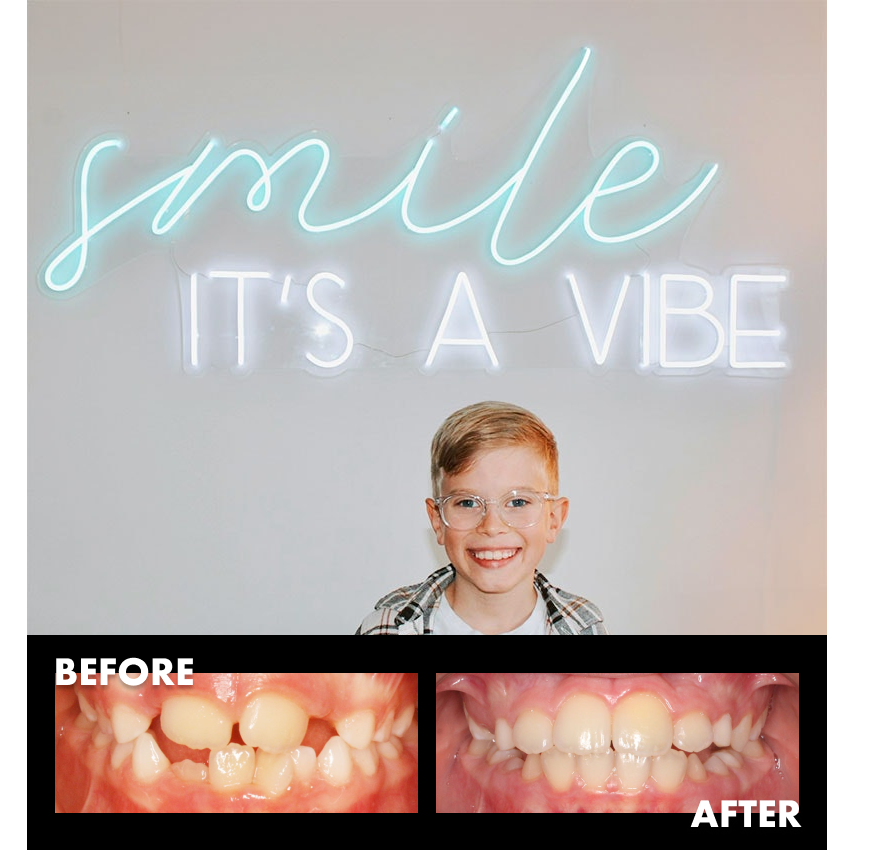
Hank's parents brought him to our Nashville office to get started on orthodontics early. Phase One of his treatment included braces and an expander to correct his jaw width and crowding. As his adult teeth continue to emerge, he will enter Phase Two of his treatment.
Investment
Our team will provide a custom quote and expected timeline for your child's treatment during their complimentary consultation. In general, the typical price range for a child with a mix of baby teeth and adult teeth is $3,200–$4,500. The projected timeline is typically 12–18 months. To compare, treating someone who has all of their adult teeth can cost $6,200–$8,500.
Of course, complying with treatment can keep your child on schedule and help them finish treatment as quickly as possible. Make sure your child is taking care of their braces as directed, and that they attend all of their appointments so we can tighten their braces and adjust their treatment plan as needed. Many children will need two phases of treatment, but we can discuss this at your child's initial consultation.
An Alternative Option

While most children are better candidates for braces because there's less room for error, some children can be candidates for Invisalign® clear aligners if they're compliant. Clear aligners can be removed for eating and oral hygiene, but children must remember to put them back into place and wear them for 20-22 hours each day.
Failure to comply will add time to your child's treatment plan. But if you feel your child is responsible and can remember to wear their aligners, this could be another good option.
Brace-Friendly Eating
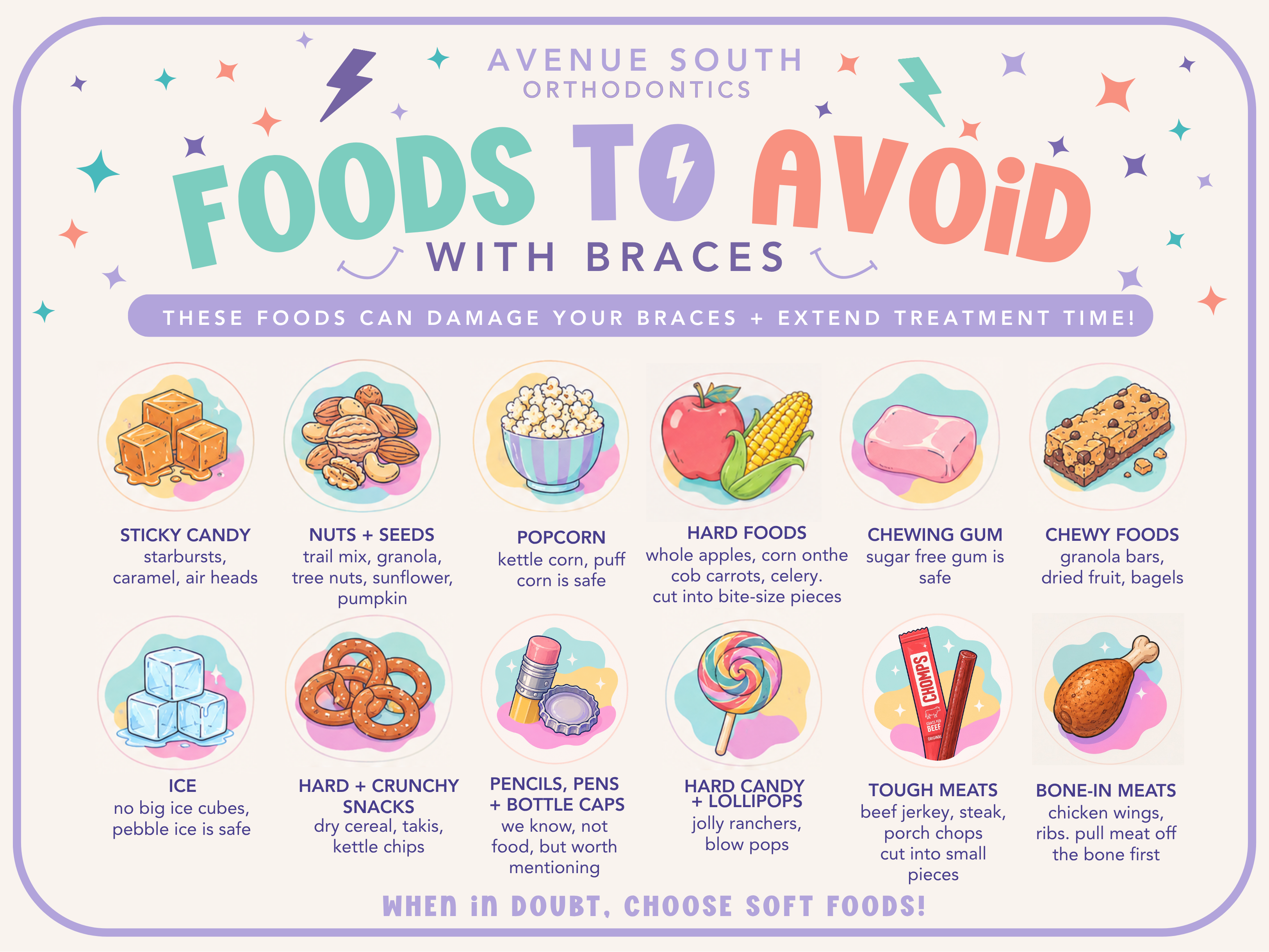
Clear aligners are removed for meals and any other drinks other than water, so they have no food restrictions. If your child receives braces, there are some foods they should avoid eating to prevent dislodging brackets, bending wires, or trapping food debris.
Get Started
The American Association of Orthodontists recommends that children see an orthodontist for an exam at age seven to ensure everything is developing properly. At Avenue South Orthodontics, these exams are complimentary, and you don't need a referral from your general dentist to come in.
If you're ready to put your child on the path to a straighter, healthier smile, request a consultation with us today.
It's Complimentary
No referral needed. No cost. Just an honest look at how your child's smile is developing and a clear plan for what comes next.
Or call us at (615) 472-1800
A welcoming orthodontic home in Nashville, TN. Since 2017, Dr. Brandon Foltz and the Avenue South team have helped kids, teens, and adults straighten their smiles in a space designed to feel less like a clinic and more like family. Here's why patients choose us:
"They make treatment so simple and personal. They have taken such good care of my daughter. We tell all our friends about this place!"
— Stasi, 5-Star Review
We'd love to hear from you; send us a message to get started.
“They have taken care of two of my kids. Beyond being great at what they do they make the process super easy and pleasant. Always welcoming. Appointment times that work for our schedule. Drink station while you wait. Love them!”
MICHELLE SUPKO, 5-STAR REVIEW
Locations
We have 2 locations to visit us at.